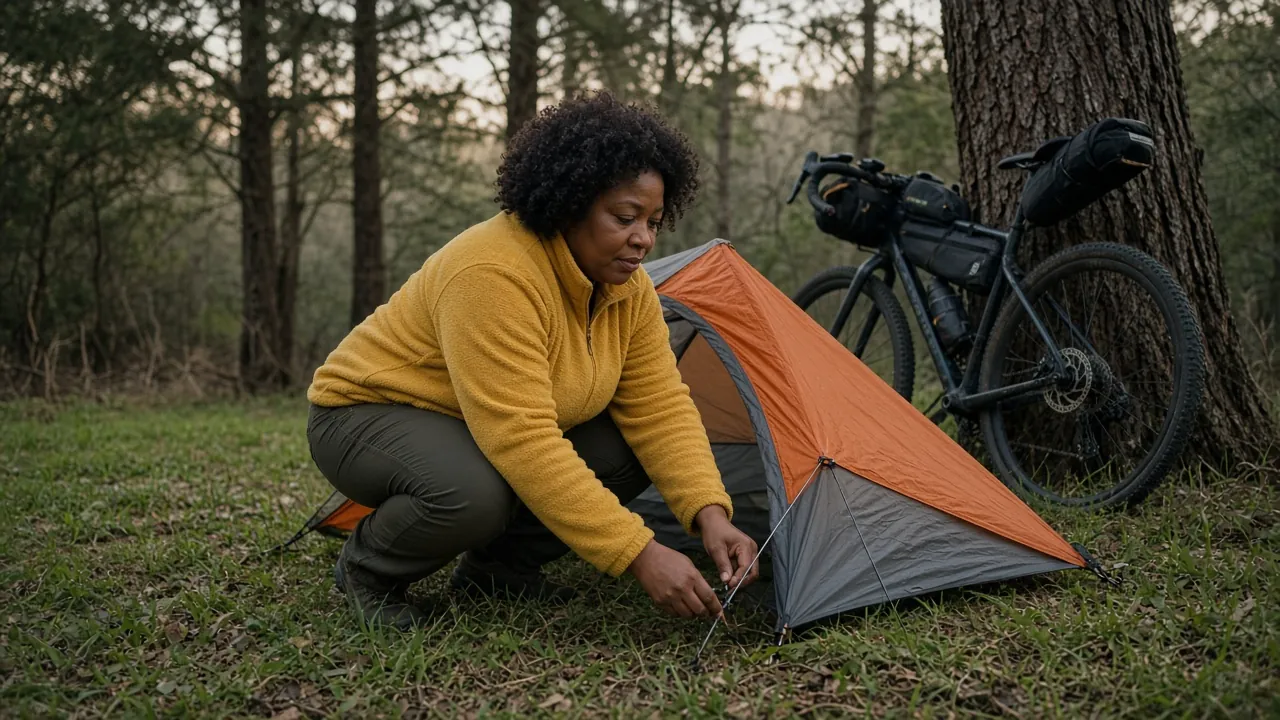
To sleep
- Sleeping bag or quilt rated a bit colder than the coldest night in the forecast
- Sleeping pad
- Small tent, tarp or bivy
- Headlamp, kept in the same pocket every night
For the bike
- Whatever bags you have: frame bag, seat bag, panniers, or a dry bag strapped to the bars
- Spare tube that fits your tires, tire levers, patch kit and a multi-tool
- A pump you've already used at home
- A couple of zip ties, a spare strap and a bit of tape
- Front and rear lights, charged
To wear
- What you ride in
- One dry set for camp, sealed in a dry bag and never ridden in
- A warm layer, like a fleece or light puffy
- Rain jacket if there's any chance of rain
- Socks you can sleep in
To eat and drink
- More water than a day ride, and know where the next tap is
- Filter or tablets if you'll drink from a stream
- Dinner you can eat cold
- Breakfast and snacks you already like
To stay safe
- Phone, ID, a card and a little cash in a zip bag
- Your route saved offline or screenshotted
- Someone at home who knows your route and when you'll check in
- A loud whistle
- A small bell or carabiner for the tent zipper
Just for you
- Chamois cream, if you use it
- Sunscreen and a small first-aid kit
- Period products, in a zip bag
- Pee cloth or a funnel you've practiced with, plus a bag to pack out paper
- Any meds you can't go without
That's it. The rest of this is what women in the group tell each other before a first night.
Keep it simple
You don't need new gear for one night. BIKEPACKING.com's advice for a first overnighter is to use the bike and camping gear you already own, pick a short loop near home that you know, and leave the cooking kit behind. Women in the group say the same about bikes: "I would definitely start with the bike you have, see if touring is for you, not everyone likes it, then upgrade."
If your bike has never felt quite right, read how wheel size changes fit on a smaller frame before you buy anything. A small frame also leaves less room for a frame bag. When the triangle was tight, women in the group asked: "Would they fit a front fork cage? That would give them a bit more structure and separation on rough terrain." Check your fork before you order cages.
Bring your lights even if you plan to be at camp well before dark. Cycling UK says to pack lights even for daylight riding, and to keep spare clothes and your sleeping bag in dry bags if your bike bags aren't fully waterproof.
On clothes, women in the group: "As they say, there's no bad weather. Just bad clothing. Ha. Seriously, get yourself a merino top and socks. And splurge on rain gear. I have the Cleverhood cape but there are many options." For one night, the rain jacket you already own will do. What matters most is that your camp clothes stay dry.
Food is easy. Dinner can be a sandwich or a wrap, and you can buy breakfast on the way home. Women in the group: "Drink before you're thirsty (sip every 15 minutes) and eat before you're hungry (at least every hour, preferably 1/2 hour)." And: "Powders and potions and gels are for athletes, not bike riders, imo. Normal food is best."
Sleeping alone in a tent
Most of us are nervous the first night. Women in the group: "The fear of the unknown can be intense at first, but after 1–2 nights, you'll stop being afraid..."
Don't lock yourself in. "My advice would be to not 'lock' your tent in case you need to get out quickly - perhaps have a bell on the zipper instead?" Keep your whistle and light where your hand can find them in the dark: "A small carabiner and bell is enough. I have a spare tent peg that is next to me when i sleep, my very loud rescue whistle and headtorch always present."
At a campsite, say hello. "On campsites, I always chat to the people around me and try to camp next to families, retired people or other cyclists." Pitch while it's still light. This is community experience, not safety advice.
Saddles and peeing outside
Everything in this part is community experience, not medical advice.
Chamois cream is cheap and worth packing. Women in the group, on a saddle that worked for them: "Your sit bones rest higher up on the saddle allowing your delicate bits to float in the curve with no pressure... chammy cream is always a good idea." If your saddle already bothers you on day rides, sort it out before the trip, not on it. "We all come in different shapes & sizes, so there's not one seat that fits everyone. Go to a good bike shop & have your pelvic bones measured."
For peeing, women in the group do it every way there is. One camp: "I'm 73, been squatting behind trees for 70 years." The other: "My P-Style is my life saver. I keep one in the car for long trips... I keep a Kula cloth with it." If you want to try a funnel, practice at home first, and take this tip from women in the group: "Choose a spot where the ground slopes away from you... I have a small dry bag with a small spray bottle of alcohol I can spritz my hands and the funnel with before putting it away." Whatever you use, pack your paper out.
Before you go
Tell someone where you're going and when you'll check in. Ride somewhere you could bail from easily, and come home early if the weather turns. The point is to sleep out and ride home, not to prove anything. If you're not sure how far to go, here's how far to ride on your first night out.
Still have a question? Ask it in Women’s Bikepacking & Bike Touring on Facebook. Plenty of us were packing for our first night not long ago. Women in the group put it best: "I find the fear always is much greater than the reality. Just go and find out."
If you'd like the next one in your inbox, sign up for the newsletter.